

Searching the stars: Theories behind the mystery of extraterrestrial life
From Fermi’s paradox to the Dark Forest hypothesis, scientists and writers attempt to explain the universe’s eerie silence
Searching the stars: Theories behind the mystery of extraterrestrial life
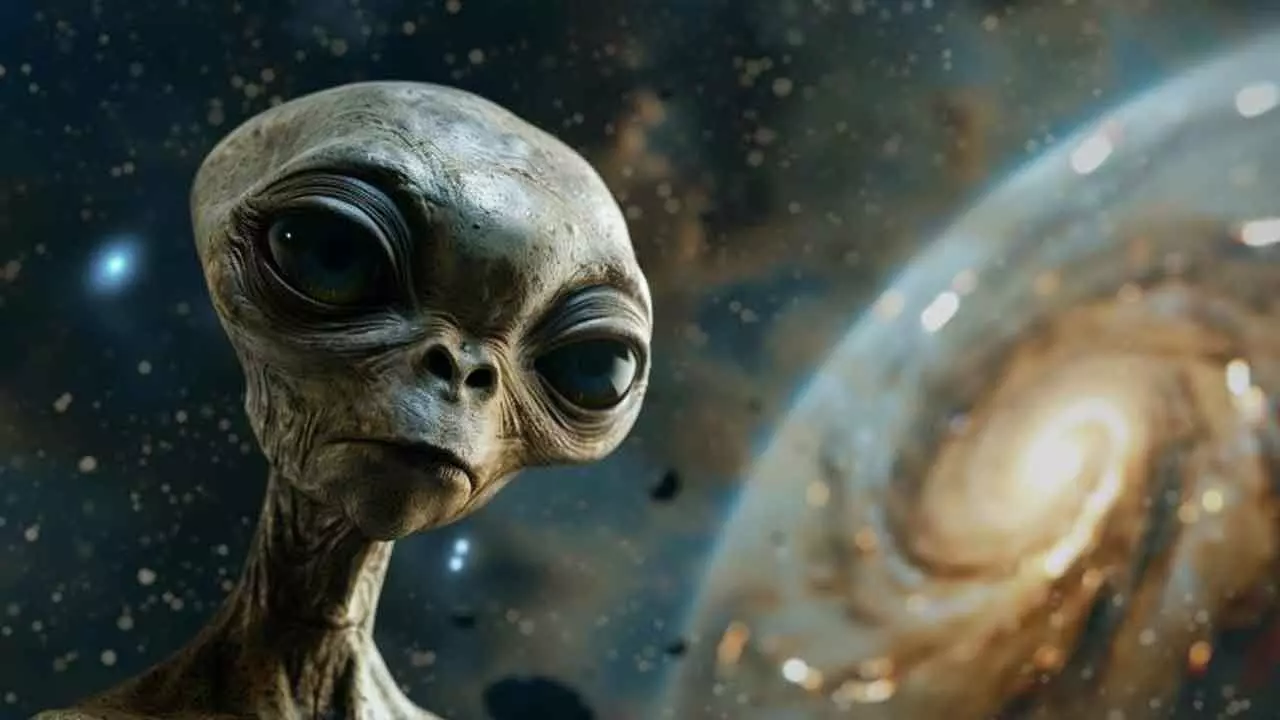

The mindless exploitation of the natural resources of planet Earth by her children, and the alarming consequences that await humankind as a result, were the subject matter of the pieces that appeared in this column on August 15 and 22, 2019.
Those discussions also touched upon attempts being made to find viable solutions to the vexing problem of colonising celestial bodies elsewhere in the solar system, or even beyond, should the need arise for earthlings to flee their native planet and seek refuge elsewhere.
This week, it is proposed to walk readers through the fascinating lanes and bylanes of scientific thought, romantic speculation, exciting fiction in the form of books and movies, and serious scientific theories relating to the possibility of the existence of extra-terrestrial life.
One of the most popular ideas in this context is Fermi’s paradox, which highlights the discrepancy between the lack of conclusive evidence of advanced extraterrestrial life and the high likelihood that such life should exist.
The paradox is named after Enrico Fermi, the renowned Italian-American scientist who created the first nuclear reactor and famously asked the question: “But where is everybody?”
Fermi followed up this query with a series of calculations about the probability of Earth-like planets, the likelihood of life emerging on planets other than Earth, and the potential rise and duration of advanced technological civilisations.
Based on these calculations, he concluded that humanity should already have been visited, perhaps many times over, by extraterrestrial beings.
The question appeared in print in a 1963 paper by Carl Sagan and has since been widely discussed and analysed by scientists. Numerous attempts have been made to resolve the paradox.
Some suggest that intelligent extraterrestrial life may be extremely rare, while others argue that advanced civilisations might not last long enough to establish interstellar contact. Yet another possibility is that such civilisations exist but humans simply have not detected them.
Several facts and hypotheses illustrate the apparent contradiction behind the paradox. Astronomers estimate that there are billions of stars in the Milky Way similar to the Sun. Many of these stars are likely to host Earth-like planets orbiting in what scientists call the habitable zone, where conditions could support liquid water and potentially life.
Some of these planets may have developed intelligent life capable of interstellar travel long before humanity appeared on Earth. Even at the relatively slow speeds imagined for interstellar spacecraft, the Milky Way galaxy could theoretically be traversed in a few million years.
Considering that many Sun-like stars are billions of years older than our Sun, extraterrestrial civilisations could, in principle, have visited Earth, or at least sent exploratory probes, long ago.
Yet there is no convincing evidence that such visits have occurred. Interestingly, the roots of this paradox can also be traced to science fiction. Jules Verne touched upon similar ideas in his 1865 novel Around the Moon, which explored early concepts of space travel and humanity’s curiosity about other worlds.
Another early formulation appeared in the writings of Russian rocket scientist Konstantin Tsiolkovsky. He proposed that humanity might be deliberately quarantined by extraterrestrial beings in order to protect its independent cultural development.
This idea resembles the Zoo Hypothesis, later proposed by Carl Sagan, which suggests that advanced alien civilisations deliberately avoid contact with Earth so that human civilisation can evolve naturally. In this scenario, our planet is treated much like a wildlife preserve, or a “zoo”, observed from a distance but left undisturbed.
Another intriguing concept is the Dark Forest hypothesis, inspired by the 2008 novel The Dark Forest by Liu Cixin. According to this idea, extraterrestrial civilisations might be abundant across the universe but remain silent and hidden because revealing their existence could invite destruction from more technologically advanced and hostile civilisations.
Since the intentions of any newly contacted civilisation can never be known with certainty, then if one is encountered, it is best to make a pre-emptive strike, in order to avoid the potential extinction of one's own species.
It also contrasts the apparently high probability of extra-terrestrial life with the lack of evidence for it. The novel provides a detailed investigation of Liu's concerns about alien contact
A similar hypothesis, was described by astronomer and author David Brin in his arguments for and against the Fermi paradox, namely, the Berserker hypothesis (named after the Berserker series of novels by Fred Saberhagen), also known as the deadly probes scenario.
The suggestion is that humans have not yet detected intelligent alien life in the universe because it has been systematically destroyed by a series of lethal probes called Von Neumann probes which are hypothetical, self-replicating spacecraft designed to explore or colonize the galaxy by creating copies of itself using raw materials found in new star systems
Isaac Asimov, the celebrated scientific fiction author held an optimistic, rational view on extra-terrestrial intelligence in his book 'Extraterrestrial Civilizations', in which he concluded, using astronomical data that the sheer number of stars makes life elsewhere highly probable.
Among the most widely read works exploring human attempts to contact alien intelligence is the novel Contact by Carl Sagan. The book is widely praised for its scientific accuracy and its exploration of humanity’s deep curiosity about whether other intelligent species exist in the universe.
In the story, scientists working with the Search for Extraterrestrial Intelligence detect a radio message from the Vega star system containing a blueprint for a machine capable of transporting humans to distant regions of space. Five scientists eventually use the device, travelling through wormholes to a station near the centre of the Milky Way.
There, each traveller encounters an extraterrestrial being appearing in the form of a loved one. The aliens are revealed to be peaceful observers who have been quietly monitoring humanity’s progress. The journey also uncovers the idea that transcendental numbers such as pi may contain hidden cosmic messages embedded within their digits.
Turning the issue on its head, numerous theories have also emerged suggesting that aliens may have already visited Earth. Stories about sightings of Unidentified Flying Objects (UFOs) have long captured public imagination, though none has yet provided definitive proof of extraterrestrial contact.
To end this discussion on the customary humorous note, there is a story about two Martians who land on Earth and encounter a human being. They demand to be taken to the leader of the species. When asked why, they reply: “We want to make sure your species is really as silly as it is made out to be on the internet!”
Perhaps that remark contains a grain of truth. In many ways, it reflects the increasingly lemming-like tendencies that humankind sometimes appears to display.
(The writer was formerly Chief Secretary, Government of Andhra Pradesh)





